Project Palma
In development · first build under way
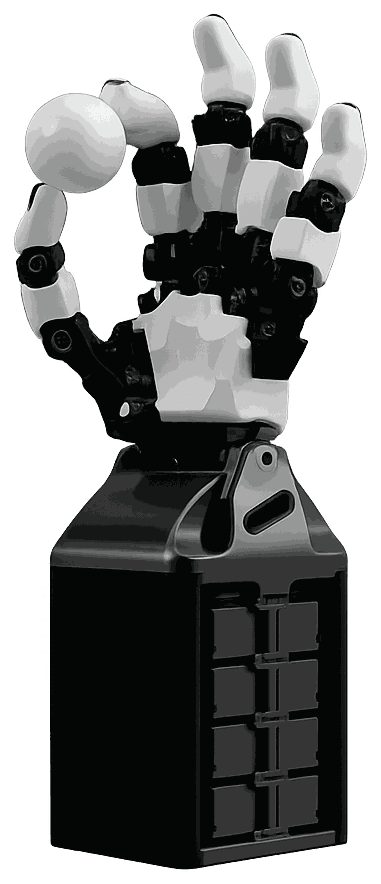
Project Palma takes the open source ORCA hand as its base and runs new models on it. It is how I stay in touch with the bleeding edge of robotics, not by watching from a distance, but by owning a piece of it, printing it, assembling it, and learning what it takes to make a machine move like a hand.
It gives my work in machine intelligence a body, and it keeps the whole field at a price a student can actually afford.
The platform
The ORCA hand was chosen deliberately. It is open source, printable, and among the most affordable dexterous hands available, priced like a phone rather than a research grant.
Affordability is the point. It keeps embodied machine intelligence inside a student budget, and it means a broken finger is a lesson rather than a disaster.
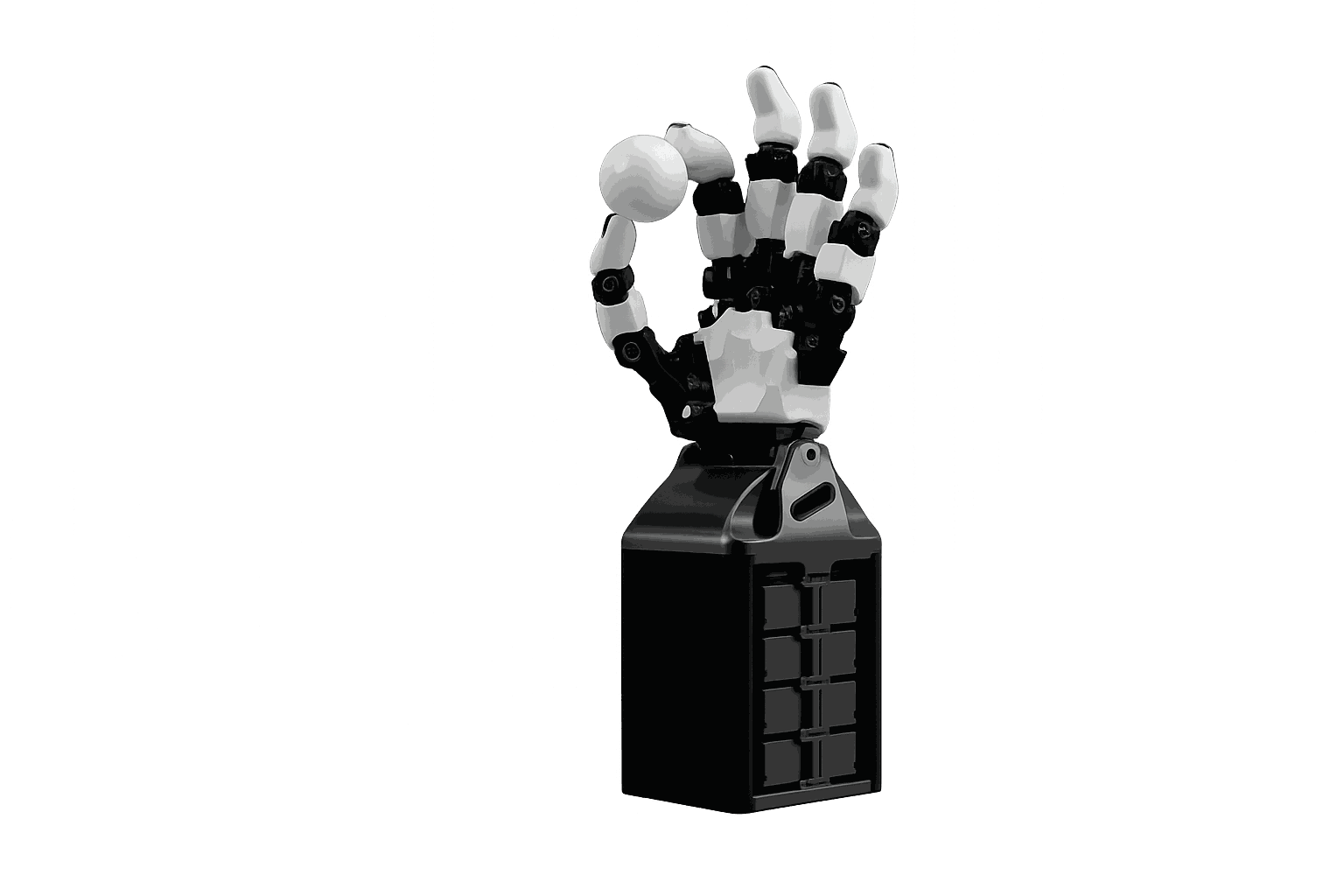
ORCA v1, the open source hand Palma builds on. Shown as a render.
The build
The plan is deliberate and rapid: the printable hand as the foundation, printed, assembled and actuated using university fabrication facilities, with active work separated from passive printing time.
Nothing is claimed as built yet. Build photography will appear here as the hand comes together.
Future tests
The dexterity benchmarks, in order of ambition: picking up objects, expressive gesture, and, someday, the oldest party trick of dexterity there is, rolling a coin across the knuckles. That last one is a target, not an achievement.
Reflection
A hand is the most honest test of embodiment: every claim about machine intelligence becomes either a grip or a fumble.
bennett harris
Systems Artist
Working across objects, infrastructure and machine intelligence.